
About
Accelerating conservation decisions with open source AI.
Conservation decisionmakers often need answers that draw on dozens of geospatial datasets, quickly. GLEN connects a language model to authoritative data and open source geospatial tools, so anyone can get fast, reproducible analysis.
Talk to the dataAsk questions in plain language and get answers on the map.
Type a question, or draw an area on the map, and GLEN finds the data, runs the analysis, and shows the answer as a map, a table, or a chart.
Answers others can checkEvery query can be shared, checked, and changed by others.
GLEN shows each step it takes and points out the caveats of each dataset and the limits of what it can show, so that results are read for what they are.
Runs on a small server, not a data centerThat keeps cost and energy use low.
Running on local hardware rather than in a commercial data center also lowers privacy concerns and keeps users in control of their data.
Fully open sourceAnyone can inspect, modify, and redistribute it.
GLEN and the tools it is built from are open source under the Apache 2.0 license, and its data comes from public sources, each cited with its license.
Benefits of local language models
Open local language models offer many benefits for using AI in science. These models run locally on a user's computer (no data center required) and provide processing power comparable to commercial models.
Robust Science
Open local models offer researchers sufficient speed and quality of results.
Energy Efficient
Can use 100x less energy than a commercial model.
Privacy
Users have total control over their data.
Freedom of Use
While requiring some technical expertise, open local models can be viewed, used, modified, and distributed by anyone.
Low Cost
Open local models run for free.
Enhanced Reliability
Access to the internet or the cloud are not required.


News
Why scientists should lead the shift away from AI mega data centres
Our commentary on the approach behind GLEN: AI for science can improve through efficiency rather than scale, with compact open models running on local hardware.
ReadPartners
We build each application with organizations that bring the data, expertise, and questions behind it.





Team
-
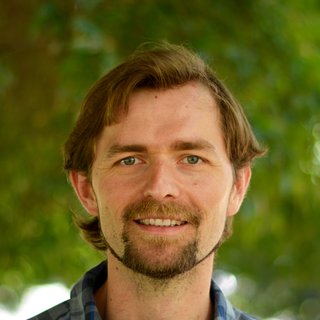
Carl Boettiger
-
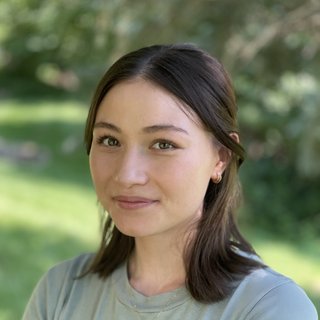
Cassie Buhler
-
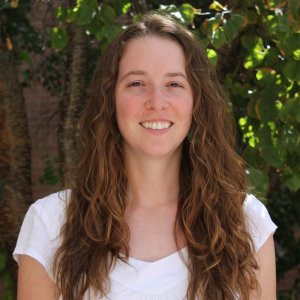
Kristin Davis
-
Magali de Bruyn
-
Matt Fisher
-
Ciera Martinez
Contact
For press, partnerships, or support for the work, email us: dse@berkeley.edu